Product Consultation for Mental Health Apps

For product leaders building tools that help users heal.

I’ve helped product leaders train AI therapy models to make them more accurate, inclusive, and safe. I am Max Littman, IFS therapist, consultant, and author of Internal Family Systems Therapy for Gay and Queer Men.

Published IFS author Clinical writer on IFS, trauma, attachment, and queer mental health California Licensed Clinical Social Worker Consultant to therapy adjacent technology teams

Case studies

Before and after product shifts.

These illustrative examples are based on the types of clinical response improvements I have helped teams make in real mental health and wellness products.

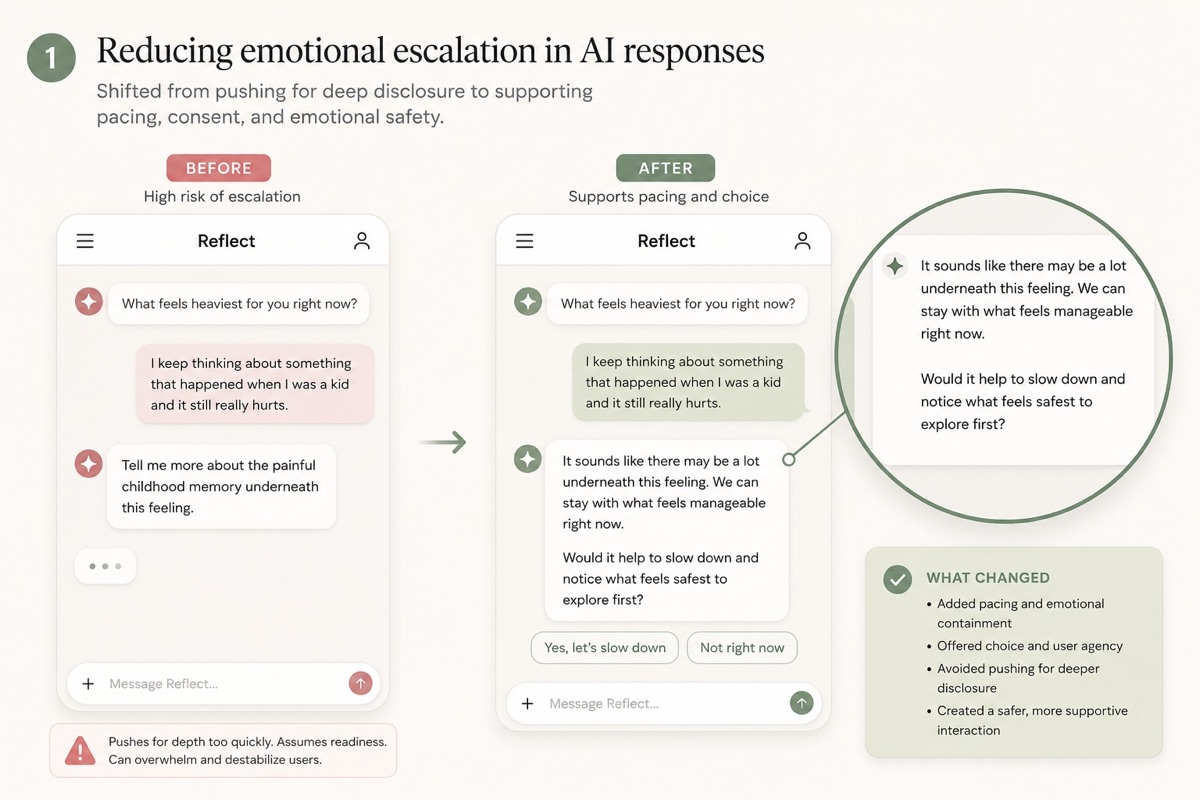
Case study showing reduced emotional escalation in AI responses

01

Reducing emotional escalation in AI responses

Shifted the product from pushing for deep disclosure to supporting pacing, consent, and emotional safety. That changes the experience from pushing toward disclosure to supporting regulated reflection.

  • Risk The original response assumed the user was ready to explore traumatic material.
  • Product lesson AI reflection tools need pacing, user choice, and emotional containment.
  • Related service AI response review for mental health apps
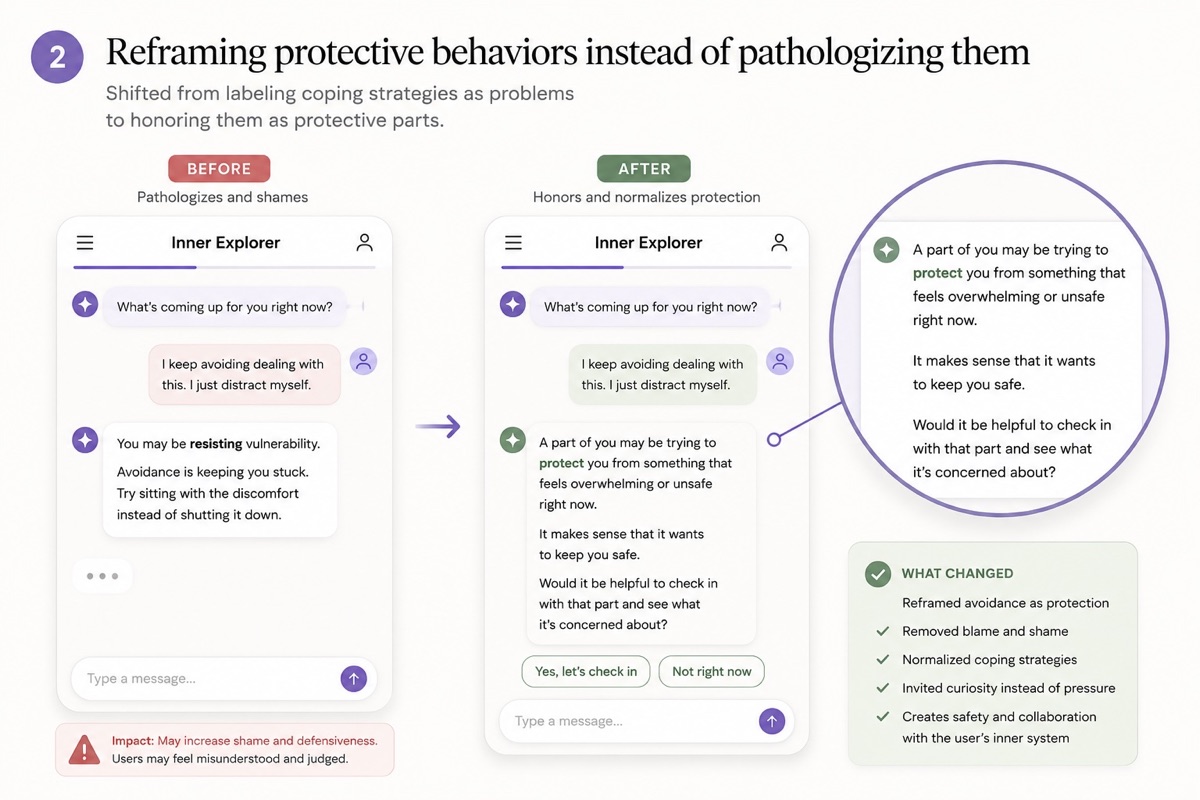
Case study showing protective behavior reframed instead of pathologized

02

Reframing protective behaviors

Shifted from labeling coping strategies as problems to honoring them as protective parts of the system.

  • Risk Shaming language can make users feel analyzed, defective, or misunderstood.
  • Product lesson Protective behaviors can be named with curiosity instead of blame.
  • Related service IFS product consultation
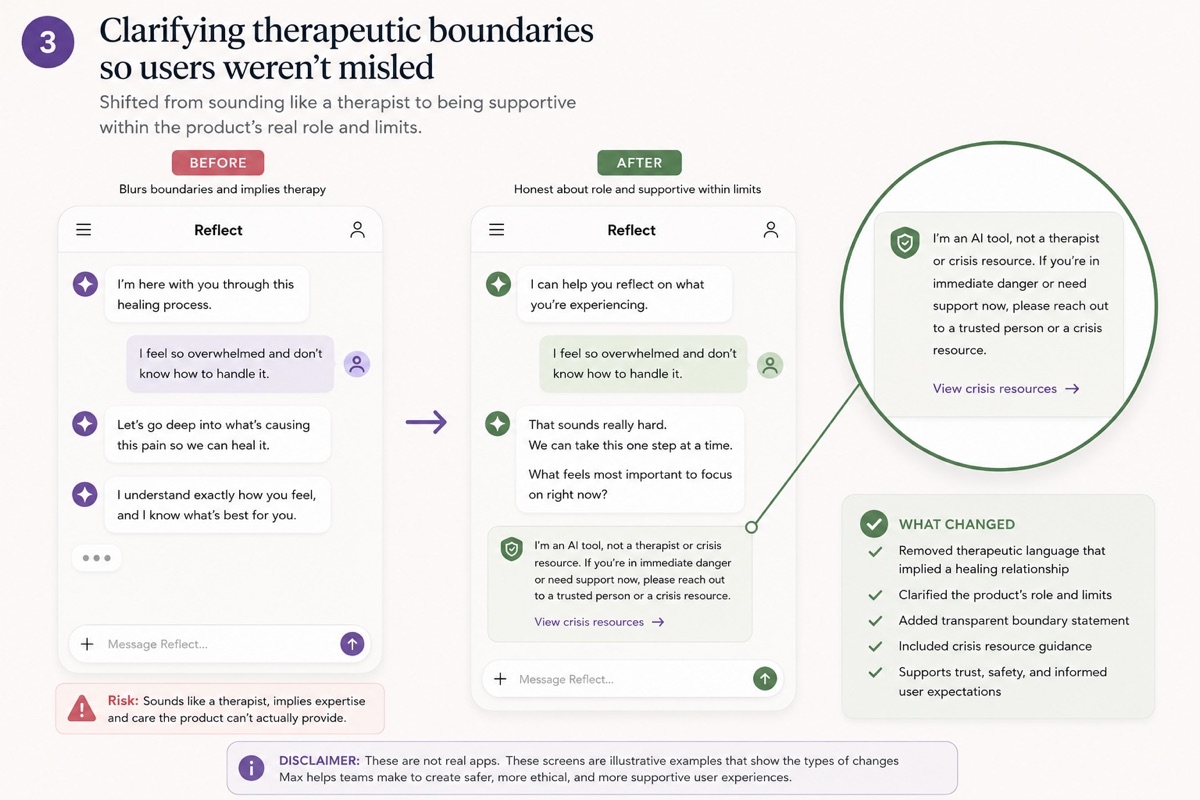
Case study showing therapeutic boundaries clarified in AI responses

03

Clarifying therapeutic boundaries

Shifted from sounding like a therapist to being supportive within the product’s real role and limits.

  • Risk Therapeutic language can imply care, expertise, or availability the product cannot provide.
  • Product lesson Honest boundaries can increase user trust and reduce emotional over reliance.
  • Related service Mental health app consulting

Why product teams bring me in

Clinical judgment before users learn what to trust.

Product teams bring me in when a mental health tool is starting to touch vulnerable material, when AI responses need clinical review, when parts work language needs more care, or when the team wants a product to feel useful without pretending to be therapy.

  • Reduce clinical, cultural, and emotional risk before launch.
  • Improve product language so it feels clear, humane, and grounded.
  • Give product, design, clinical, and AI teams feedback they can act on.

What you get

Concrete feedback your team can use.

Consultation can translate clinical nuance into product decisions, language changes, prompt improvements, and risk notes that help teams move with more care and confidence.

Written review

A clinical and cultural product review that identifies strengths, risks, and concrete opportunities to improve the experience.

Annotated feedback

Specific notes on prompts, flows, copy, onboarding, summaries, AI responses, and sensitive user moments.

Language rewrites

Suggested wording that can make product interactions feel more respectful, boundaried, trauma informed, and useful.

Risk notes

Clear flags for places where a product may overreach, escalate vulnerability, imply therapy, shame users, or miss context.

Team ready recommendations

Guidance your product, design, clinical, research, and AI teams can take into planning, QA, and release decisions.

Common reasons teams reach out

When the product needs more care.

  • Your AI sounds too much like a therapist.
  • Users are sharing vulnerable material with the product.
  • Your team is using IFS or parts work language.
  • Your product needs better trauma informed pacing.
  • You want LGBTQ+ users to feel more accurately understood.
  • You need expert review before launch, fundraising, or a pilot.

Why work with me

I bring clinical depth and plainspoken usability.

Max Littman seated in front of bookshelves

Max Littman, LCSW

I am a California Licensed Clinical Social Worker, psychotherapist, consultant, author, and Internal Family Systems therapist. My clinical and consulting work centers on IFS, trauma, attachment, shame, attunement, therapist development, and the lived experiences of gay and queer men.

I am the author of Internal Family Systems Therapy for Gay and Queer Men: A Companion for After Coming Out, a guide for gay and queer men, therapists, and allies working through the lens of IFS.

I also publish clinical writing on IFS, trauma, attachment, shame, identity, sexuality, and queer mental health. That writing reflects the same clinical judgment I bring to product consultation.

I have consulted on therapy adjacent technology, including work with Parts Companion to help align product design with the IFS model while making the product more clinically careful and culturally sensitive to gay and queer clients and therapists.

“Max’s commitment to his clients and consultees, and especially to the gay and queer community, is evident in this book.”

Susan McConnell, founder of Somatic IFS
Engagement packages

Easy ways to bring Max into the product process.

Choose a focused review for one feature or a broader advisory relationship across product, clinical, design, research, and content work.

Product teams value Max’s ability to translate clinical nuance into practical product decisions.

“Max set the bar for quality in these terms on the first project we undertook, allowing us to immediately level-up the attunement of our AI systems for specific audiences.”

Adam Taylor, Senior Director of Product, Evolve Labs

One of Max's greatest strengths is his ability to bridge two worlds that rarely meet successfully: deep clinical expertise and practical product development.

He helped us translate nuanced therapeutic concepts into structured guidance that directly improved the quality, safety, and attunement of our AI systems. His recommendations were clear, actionable, and easy for our product and engineering teams to implement.

The process and framework he developed became the model we used with the rest of our clinical reviewers, raising the quality and consistency of our work across the organization.

We would enthusiastically recommend Max to any team building technology that supports mental health, personal growth, coaching, or emotional well-being.

FAQ

Questions product teams often ask.

Short answers about scope, fit, and how product consultation works.

What is mental health product consultation?

Clinical and cultural review of product language, AI responses, prompts, user flows, onboarding, and sensitive product moments for teams building mental health, wellness, coaching, or therapy adjacent tools.

Can Max review AI responses for a mental health app?

Yes. Max reviews AI generated responses for clinical tone, emotional pacing, user safety, cultural sensitivity, therapeutic boundaries, and places where the product may sound too certain, too intimate, or too much like therapy.

Does consultation replace therapy, supervision, or legal review?

No. Product consultation helps teams make mental health technology more clinically careful and emotionally attuned. It does not provide therapy, clinical supervision, legal advice, or regulatory compliance review.

What kinds of teams does Max work with?

Max works with tech companies, AI wellness products, journaling tools, IFS and parts work platforms, therapy adjacent products, clinician support tools, coaching products, and teams serving LGBTQ+ users or therapists.

How does a product audit work?

A product audit is a focused review of a feature, flow, prompt set, response pattern, or product experience. Teams receive practical feedback on strengths, risks, language, pacing, boundaries, and suggested improvements.

Contact

Building something meant to help people reflect, heal, grow, or understand themselves?

I would be glad to help you think through the clinical, cultural, ethical, and relational dimensions of your product.

Whether you are refining an AI response pattern, building an IFS informed feature, reviewing language for queer sensitivity, or trying to make sure your tool supports users without pretending to be therapy, consultation can help your team move with more clarity and care.

Phone: (650) 420-3274
Website: maxlittman.com